
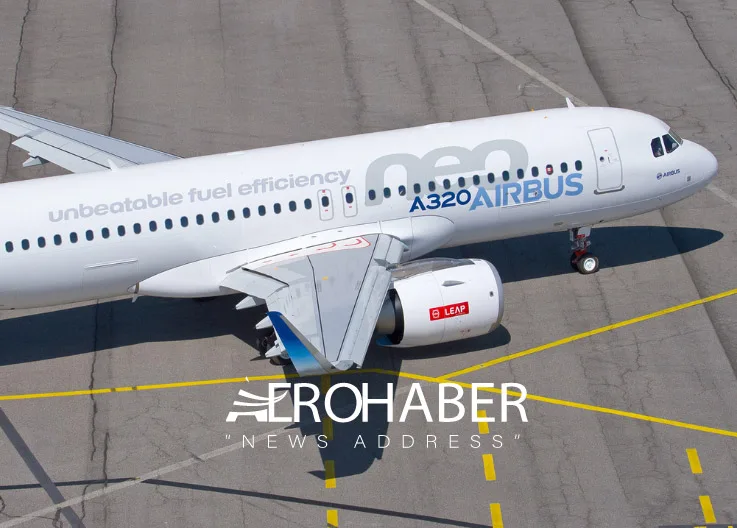


The U.S. Federal Aviation Administration (FAA) officially brought an emergency airworthiness directive into force for Airbus A319, A320 and A321 models with a final regulation published in the Federal Register on Monday. The decision, which will generally take effect on 6 January 2026, confirms the interim emergency measures adopted on 28 November 2025.
The regulation was prompted by an incident in which an Airbus A320 aircraft pitched down uncontrollably, resulting in a brief loss of altitude. It was reported that the autopilot was engaged at the time of the event, while Airbus preliminary assessments shared by the FAA indicated that the likely fault originated from the Elevator Aileron Computer (ELAC).
The FAA warned that this malfunction in the ELAC system could cause elevator movements to exceed the aircraft’s structural limits, creating serious flight safety risks. In this context, a fleet-wide mandatory repair requirement was imposed on the Airbus A320 fleet following the November incident.
Unlike the initial notification sent only to affected operators in November 2025, the published final rule includes mandatory applications covering the entire aviation sector. One of the most notable changes in the regulation concerns special flight permits. The FAA announced that aircraft that have not yet completed the modification will be allowed to fly to maintenance facilities only under certain conditions. These flights are limited to non-revenue operations, outside the scope of ETOPS, and restricted to a maximum of three flight cycles.
In addition, the document includes terminology updates aligned with EASA (European Union Aviation Safety Agency). While EASA uses the phrase “before the next flight,” the FAA strengthened the wording to “before any subsequent flight” in order to increase legal enforceability. With this change, the aim is to ensure that no aircraft takes off before the required corrective actions are completed.
Aircraft affected by the directive cover a wide range, from the A319-111 series to the A321-271NX Neo family. The FAA estimates a labour cost of USD 255 per aircraft for maintenance, repair and overhaul (MRO) work, while noting that spare parts costs remain uncertain due to the lack of clear data on the prices of the new flight computer units.