Engine Issues Are Straining United’s Flight Plans
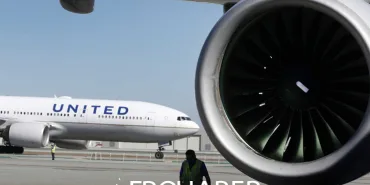
United Airlines is temporarily grounding part of its fleet due to recurring technical issues experienced on Boeing 777 aircraft equipped with Pratt & Whitney PW4000 engines. According to aviation sources, some aircraft are being placed into storage in Victorville, California, and depending on engine parts availability, more aircraft may also be taken out of service.
The airline operationally needs these aircraft; however, the slow pace of engine maintenance processes is making it difficult to keep the fleet continuously flying.
United Is the Only U.S. Operator of Pratt-Powered 777s
United’s fleet includes a total of 96 Boeing 777 aircraft:
- 22 units of 777-300ER
- 55 units of 777-200ER
- 19 units of 777-200
Of these aircraft, 52 are powered by Pratt & Whitney engines, making United the only airline in the United States operating 777s with this engine configuration.
This means:
- Approximately 54% of United’s 777 fleet
- Approximately 23% of its widebody fleet are directly at risk.
Moreover, these aircraft are quite old. The average age of the 777-200s is 27.5 years, while the 777-200ERs average 24.8 years. In older fleets, access to spare parts and engines becomes even more challenging.
Source of the Problem: Fan Blade Cracks
At the heart of the issue are fan blade cracks detected in Pratt & Whitney PW4000-112 engines. Over time, metal fatigue can develop and, if not detected, may cause a fan blade to break off, leading to severe engine damage.
An emergency directive issued by the FAA in 2021 revealed that these cracks cannot be detected through standard visual inspections and require special imaging methods. This further extends maintenance timelines.
Past Incidents Triggered the Alarm
This engine type was at the center of two major United incidents in the past:
- In 2018, United Flight 1175 experienced a fan blade failure near Hawaii and made an emergency landing.
- In 2021, United Flight 328 suffered an engine fire shortly after departing Denver, with debris falling into residential areas.
Following these incidents, the FAA mandated comprehensive inspections and modification processes for Pratt-powered 777s. As a result, United was forced to ground more than 50 aircraft for an extended period.
How Is United’s Network Affected?
Pratt-powered 777s play two critical roles in United’s network:
- High-density routes requiring large seating capacity
- Long-haul international flights
- The grounding of these aircraft is forcing United into the following options:
- Switching to smaller widebody aircraft (787 or 767)
- Reducing flight frequencies
- Completely cancelling certain long-haul routes
Indeed, the failure to relaunch the Washington–Dakar and Newark–Stockholm routes stands among the first concrete examples of these constraints.
Is “Overwater Operations Approval” at Risk?
According to aviation sources, United is very close to a critical threshold in terms of engine reliability. The FAA closely monitors engine shutdown rates for long-range overwater flights.
Accepted limits for twin-engine aircraft are:
- Up to 120 minutes: 0.05
- 120–180 minutes: 0.03
- Over 180 minutes: 0.02 (per 1,000 engine hours)
A new engine failure could cause United to exceed these limits. In such a case:
- Diversion times may be shortened
- In the most extreme scenario, long-range overwater flight authorization could be suspended.
This would mean serious impacts on Hawaii, transpacific, and some long transatlantic flights.
Regaining Approval Is Not Easy
Reinstating long-range overwater flight approval requires:
- Consistently low engine failure rates
- Approved maintenance and operational programs
- Long-term proof of reliability
Boeing and Pratt & Whitney are working on permanent design improvements under FAA supervision. However, shortages of spare engines and parts may make it difficult for aircraft to return to service quickly, even if approval is granted.